
Learn how to use debt to grow your business without straining your finances.
Debt is a powerful tool for your business, providing the necessary capital for growth and expansion. Knowing how to take on debt strategically can help your business grow and stay efficient. When mismanaged, it can strain finances and threaten long-term stability.
Here’s what you need to know about taking on debt, the difference between “good” debt and “bad” debt, and how to manage debt to grow your business.
How to borrow strategically
Is it ok to have business debt? Yes. Used strategically, debt can fuel initiatives that drive revenue or efficiency. The key is to first assess how the debt will support your business goals.
1. Evaluate your debt needs
Before taking on any type of debt, assess what your business truly needs. List what you need capital for and how it will contribute to your business. This will help you sort your needs into two categories: “good debt,” which funds investments that generate revenue or improve the business, and “bad debt,” which funds nonessential expenses. (More on the distinction below.)
For example, using debt to purchase new equipment that increases production capacity or hiring staff to help you run the business are examples of good debt. On the other hand, taking out a loan for new office furniture might not be a priority for your business.

Tip: If you’re thinking about taking on debt, make an appointment with your Wells Fargo banker. Ask about various business credit options tailored to your business size and industry. Having a greater understanding of potential loan structures can help inform your growth strategy.
2. Pay attention to your credit scores
Borrowing and managing debt builds your business credit profile, which is helpful as your business grows and requires more capital. Both your business and personal credit scores matter when you apply for a small business loan because lenders look at both to see how you have managed debt. Credit cards, lines of credit, and a history of on-time payments all help build a strong credit score. Late payments and a high credit utilization rate (using all or most of your available credit at any given time) can hurt it. Debt consolidation loans and new credit applications can also cause a temporary dip, but timely payments can improve your credit score over the long run.
Tip: Keep regular tabs on your business using the Wells Fargo Mobile® app¹. You can also check your scores across the major credit bureaus — Dun & Bradstreet, Equifax, Experian, and TransUnion. That way, you can ensure your score is in a good place when you’re considering applying for a loan.
3. Have a payback plan
Successful debt management starts with a clear repayment plan. Review your projected cash flows and ensure you can meet all your obligations, even if your business goes through a rough patch. Wells Fargo’s budgeting and spending tools can help you track business expenses.
Common sources of debt stress for businesses include unpredictable cash flow, rising interest rates, and higher material or labor costs. A clear and realistic payment strategy can help reduce these pressures — one that goes beyond minimum payments and builds debt payment into your broader financial plan. It’s also good practice to keep enough cash on hand to weather potential downturns.
Tip: Ask your banker about what repayment terms are available and if payments can be structured so they better align with your revenue cycles.
4. Compare financing options
Your borrowing options depend on how you will use the money, whether it is for short-term or long-term needs and other factors.
Tip: Your banker can explain how different financing options work and help you pick the right one for your business goals. You can ask which financing program supports your current and future goals and how fees and interest rates compare across options. You can also use Wells Fargo’s Product Selector to choose an appropriate option for your business.
Differentiating between good and bad debt
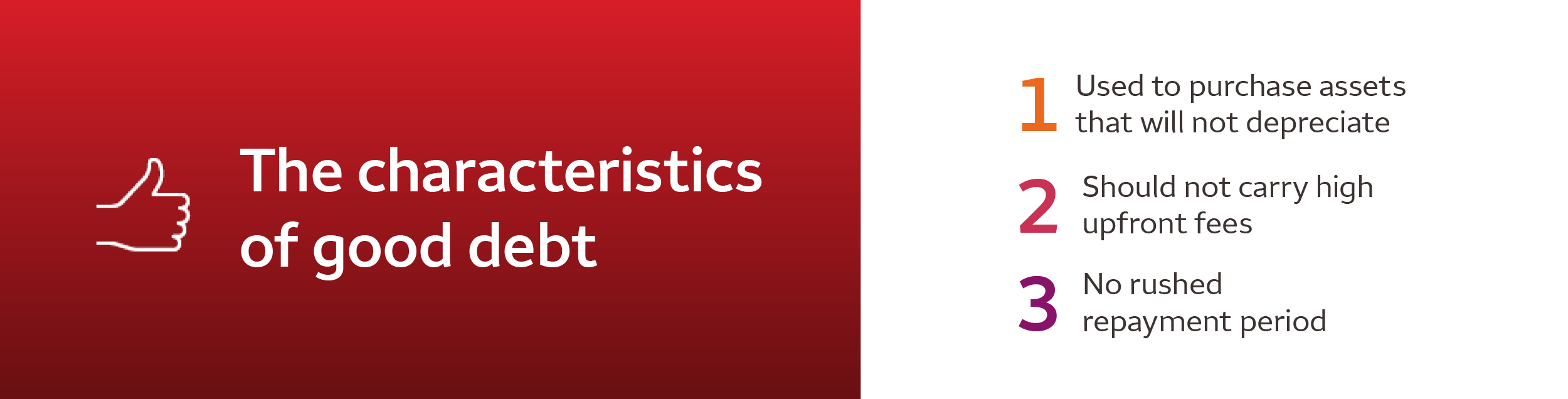
Good debt works for your business. It’s money borrowed to fund things that generate revenue or grow in value over time, such as new equipment, real estate or hiring staff.
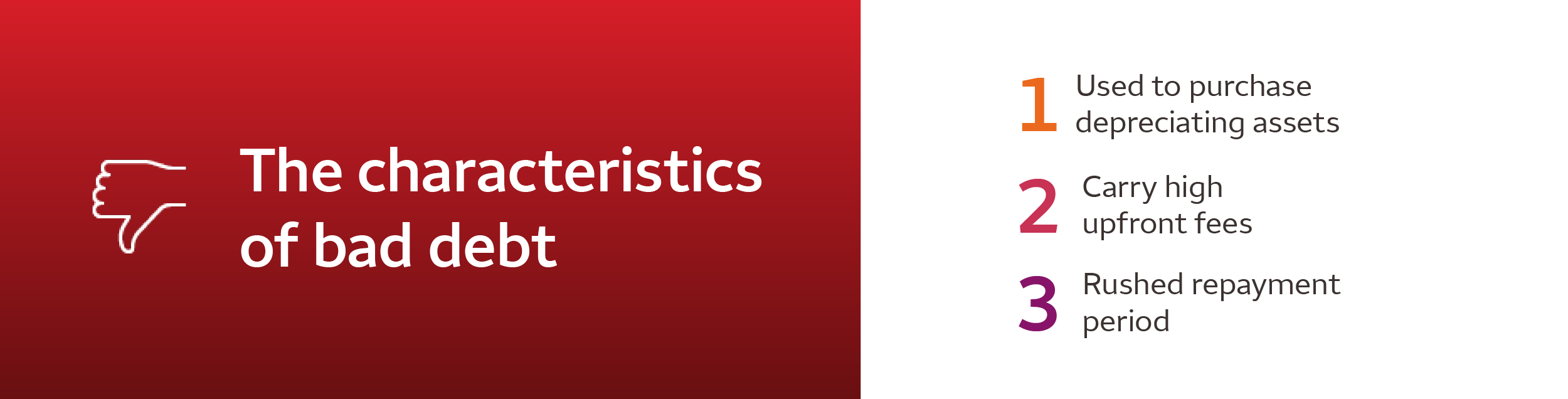
Bad debt works against your business. It’s money borrowed to purchase assets that decrease in value, like office furniture and vehicles, or debt that comes with high fees. Payday loans and merchant cash advices might seem like a quick fix, but can ultimately create long-term financial strain for your business.
How much debt to take on for your business
The “right” amount of debt depends on the size and revenue of your business. For some businesses, $20,000 could be manageable, for others, it may be significant.
1. Understand your debt capacity
There are methods to calculate how much debt your business can afford to carry. Here are two financial ratios you should know about:
a. Debt-to-equity ratio
This ratio measures how much debt your company has relative to equity it has — equity being the money you and other investors have put into the business. Debts may include small business loans or a mortgage on office space. A lower debt-to-equity (D/E) ratio generally means your business is managing debt well. But “low” is relative and some industries, like financial services, typically carry more debt than others. To know where you stand, compare to others in your industry.
b. Interest coverage ratio
This ratio shows whether your business earns enough to cover its interest payments. A higher ratio means you can more comfortably meet your obligations. Generally, an interest coverage ratio of 2 or more is considered healthy — but again, this can vary by industry.
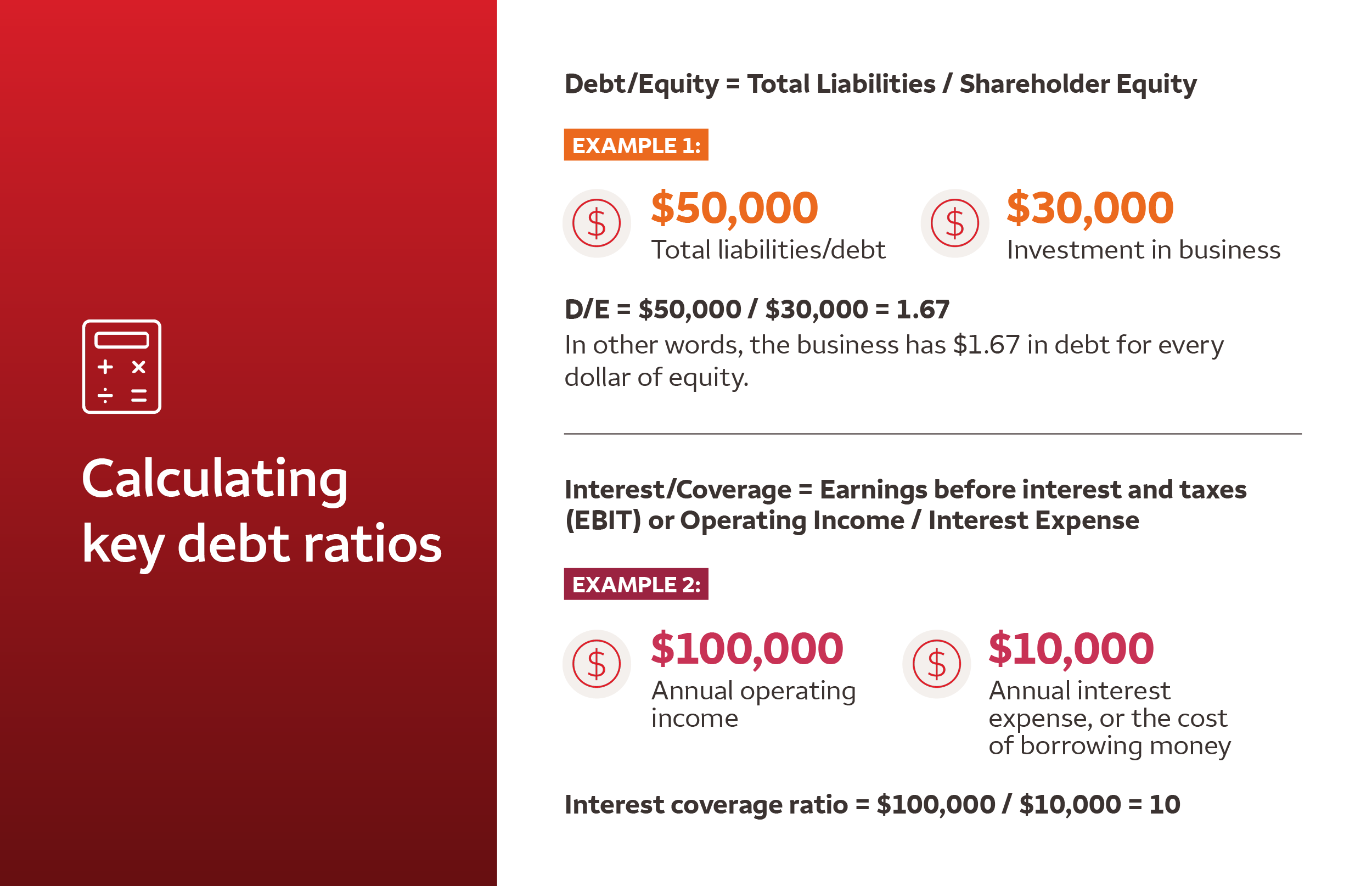
How do you know when you have too much business debt? Calculating both ratios can help you gauge your business’s financial health and understand how attractive it may appear to lenders or investors. A D/E ratio higher than the industry average or an interest coverage ratio below 2 could be a red flag. Ask your banker to help you evaluate your financial ratios and compare them to industry norms.
2. Set realistic debt limits
As you plan for new borrowing, it’s important to set an upper limit on how much debt your business should carry. This limit will depend on your industry, revenue, and growth plans. Capping debt helps you avoid overextending and maintain long-term financial stability.
Tip: Your Wells Fargo business banker can provide options tailored to your business need.
The bottom line
Debt, when handled strategically, can help propel your business forward. Your banker can be a key resource, helping you understand and compare financing options, and help you craft a customized borrowing strategy that fits your business and vision.
Take the next step. Schedule a conversation with a Wells Fargo banker to discuss your financing goals and challenges. Ask for a debt capacity review or help in mapping out a debt repayment strategy that supports your business’s growth.
1Availability may be affected by your mobile carrier’s coverage area. Your mobile carrier’s message and data rates may apply.
Sources: Investopedia 1, Investopedia 2, Investopedia 3