7 min read time

Learn what causes cash flow gaps and how to plan ahead.
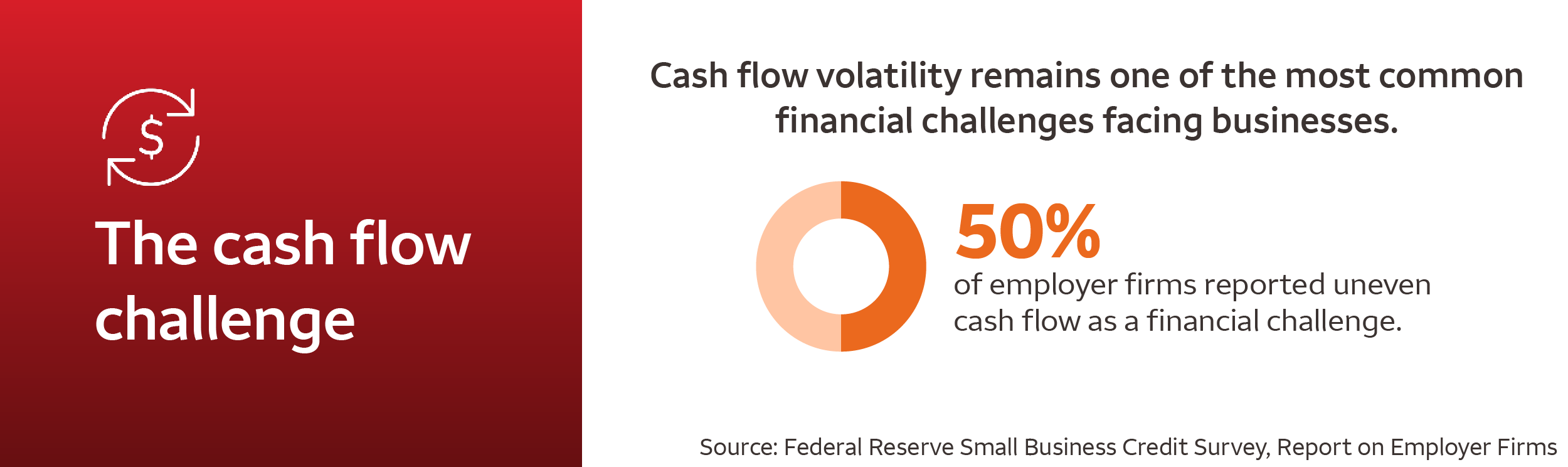
A cash flow crunch happens when a business doesn’t have enough liquid cash on hand to cover immediate obligations like payroll, rent, or supplier invoices — even when revenue is expected down the line.
The good news: many cash flow challenges can be anticipated and managed with planning and good financial decisions. Of course, it’s worth distinguishing a temporary timing gap from a deeper problem. If cash flow issues become the norm — showing up month after month regardless of how carefully you plan — it may point to something more structural: pricing that doesn’t fully cover costs, overhead that’s outpaced revenue, a business model with thin margins built in, or too much reliance on one or two customers. These issues don’t usually resolve with better forecasting or faster invoicing alone; they call for a harder look at the underlying business. Most of the strategies ahead are aimed at the more common, timing-driven crunches.
Whether you’re a solo operator or run a growing team, the goal for many owners is the same: stay positioned for growth.
Strong sales don’t always mean cash in hand; it’s often a timing issue. A contractor might finish a job today but wait 30 or 60 days for final payment. A growing business might hire staff and ramp up marketing months before that investment pays off. The goal isn’t to eliminate every cash flow crunch, but to catch them early and build strategies that lessen their impact. Here’s where to start.
Understand what causes cash flow crunches
Cash flow can slow for many reasons. Understanding them can help you minimize the impact.
- Seasonal revenue patterns. Many businesses see predictable swings in revenue throughout the year. Landscapers earn most of their income between spring and fall. Retailers lean on the holiday season. Tourism and hospitality businesses ride seasonal demand. The troughs between those crests can create challenges.
- Delayed customer payments. Waiting to get paid is one of the most common causes of cash flow pressure. Long payment terms, late payers, manual invoicing, and payment disputes can all leave a business with strong sales on paper still running short on cash.
- Payables mismanagement. How money goes out matters as much as how it comes in. Paying suppliers faster than customers pay you or over- or understocking inventory can tie up money you need elsewhere. Regularly reviewing payment terms and inventory can catch these mismatches early.
- Growth-related investments. Hiring, new inventory, and marketing pushes all require spending before the payoff arrives — creating pressure even when the outlook is strong. Even a well-timed opportunity, like a big new order, can strain cash flow if materials and labor must be paid before you’re paid.
- Unexpected expenses and disruptions. Equipment failures and supply chain disruptions aren’t abstract risks. A burst pipe that damages stock, pests that get into product, or a surprise storage failure all can create sudden cash needs for businesses with limited liquidity. And that makes contingency planning crucial.
Spot cash flow gaps before they happen
Once you understand what typically causes cash flow gaps, you can watch for them in advance. Here are concrete steps to help you stay prepared.
Build a cash flow forecast. Unlike a budget, which focuses on spending, a forecast focuses on timing: cash in minus cash out for a given period. For example, if you expect $40,000 in customer payments this month against $34,000 in payroll, rent, and supplier costs, that’s a projected net cash flow of $6,000. Here’s how to build your own forecast:
- Choose a time horizon — most businesses forecast weekly or monthly over a 12-month period.
- Map expected inflows and outflows, timed to when cash actually moves, not when it’s invoiced or earned.
- Apply those figures to your current cash position to see a running total, period by period.
- Revisit and update regularly as actual results come in.
- These habits lead to better informed, less reactive decisions. That all saves time once a routine forecast is in place, so you’re not scrambling when a gap appears. “Creating a cash flow projection” offers more detail on staying on top of cash coming in and out each month.
Watch for early warning signs
The earlier you spot the signals of cash flow challenges, the better equipped you’ll be to head them off. They include:
- Rising accounts receivable. When average days sales outstanding (DSO) climbs beyond your usual payment terms for two months running, that’s a red flag.
- Declining cash reserves, especially when they fall below one to two months of fixed expenses.
- Slower customer payments. Watch for a growing share of invoices moving past 30, 60, or 90 days overdue.
- Operating expenses growing faster than revenue for two or more periods running is an especially glaring signal.
- Growing reliance on short-term borrowing. Drawing on a line of credit more often, or carrying a balance month to month, signals cash flow trouble ahead.
And often the best way to see ahead is to look at your historical performance. When do sales typically slow? Which customers tend to pay late? What periods have created the most cash flow pressure? Answers about past patterns are often the clearest guide to future cash needs; revisit them each year to fine-tune your forecast. Businesses using the Clover reader through Merchant Services from Wells Fargo can track sales and performance, manage employees, customers, and inventory through their dashboard.
With this information, you can build contingency plans for scenarios like a major customer paying late, an unexpected sales decline, rising supply costs, or an emergency equipment replacement. This can ensure you’re making decisions ahead of a crunch, not during one.
Strengthen your cash position
- Some cash flow fluctuation is unavoidable, but a stronger financial foundation can soften its impact.
- Create and maintain a business budget for better spending discipline, forecasting, and visibility into where your money goes.
- Build cash reserves by setting aside a percentage of revenue during strong periods, keeping those funds in a separate account, with targets based on your operating expenses.
- Improve working capital management by regularly reviewing receivables, payables, inventory, and available cash. These often are the clearest indicators of short-term financial health.
- Stay flexible by maintaining reserves, preserving borrowing capacity, diversifying revenue streams, and avoiding unnecessary fixed costs.
- You can get even more granular by understanding the various types of cash flow.
Speed up receivables and use financing strategically
When a cash flow gap does appear, you generally have two levers: getting paid faster and accessing capital thoughtfully.
- Expedite receivables. Prompt invoicing, clear payment terms, electronic payments, automated reminders, and recurring billing all can shorten the gap between finishing work and getting paid. Securing deposits up front and structuring rolling payments as a project moves forward — rather than waiting on one final payment — can ease pressure. For a closer look at how your payment setup itself affects how fast you get paid, see our companion piece on building a smarter payment strategy.
- Use tools built for faster collections. Merchant Services gives you centralized reporting on sales, inventory, and performance, helping you spot slow-paying patterns early. It also enables next-day funding to your Wells Fargo Business checking account once a payment comes through, making it easier to plan around timing gaps.
- Use business debt strategically. Financing can bridge temporary timing gaps between expenses and revenue, but it’s not a permanent fix. Options include business credit cards, lines of credit, SBA loans, and term loans. A BusinessLine® line of credit¹, for example, offers an Express² application option with faster processing³ for requests up to $50,000.
The bottom line
The most successful businesses aren’t the ones that avoid every cash flow challenge. They’re the ones that spot shortfalls early, plan ahead, and stay flexible enough to respond before it becomes a scramble.
Make an appointment with a Wells Fargo Business Banker to discuss comprehensive strategies, tools, and financing solutions tailored to your needs. They can help your business navigate cash flow gaps, improve financial flexibility, and prepare for future growth opportunities.
Merchant Services from Wells Fargo can help make this a simple experience by supporting your invoicing, recurring payments, and flexible payment acceptance. And our lending options — including business credit cards, lines of credit, SBA loans, and term loans — can help you navigate temporary cash flow gaps.